Federal Employment Pregnancy Discrimination Lawyer
Pregnancy discrimination involves the unfavorable treatment of women because of pregnancy, childbirth, or a medical condition related to pregnancy or childbirth. Laws like the Pregnancy Discrimination Act and Pregnant Workers Fairness Act prohibit discrimination based on pregnancy in regards to any aspect of employment, such as hiring, firing, training, pay, promotions, job assignments, benefits, and any other term of employment.
With more than 60 years of collective experience, our federal pregnancy discrimination lawyers have a thorough understanding of the legal system to help you obtain the most favorable outcome possible.
If you are being discriminated against due to your pregnancy or childbirth, Pines Federal is dedicated to protecting your rights. Call (832) 462-7655 or fill out our online form today to learn how we can help you.
FEATURED CLIENT REVIEW
“Awesome! The service was great and informative. Mr. Pines gave me clear directions on what to look forward to with my EEOC case and guidance on what to do next. I appreciate all his help.”
– Edwina M.
Pregnancy Workplace Laws
If a woman is temporarily unable to perform her duties because of her medical condition related to pregnancy or childbirth, the employer must treat her with the same respect as other temporarily disabled employees. Further, impairments resulting from pregnancy can be considered as disabilities under the Americans with Disabilities Act (ADA), which may force the employer to provide reasonable accommodation.
It is against the law to harass a woman due to pregnancy, childbirth, or a medical condition related to either one. Harassment in the workplace creates severe hostility which often results in adverse employment decisions, but there are several laws that protect pregnant persons.
In addition, the current administration is dedicated to strengthening protections for traditionally under-protected groups, as demonstrated by Executive Order 14035. This order reflects a commitment to equity and inclusion for certain communities, including pregnant persons, parents, and caregivers.
Pregnancy Discrimination Act
The Pregnancy Discrimination Act (PDA) of 1978 is a federal law that amends the Civil Rights Act of 1964 to prevent discrimination based on pregnancy, childbirth, or related medical conditions. It applies to employers with 15 or more employees and prohibits discrimination in all aspects of employment, including hiring, firing, pay, promotions, and benefits.
Under the PDA, pregnant employees must be treated the same as other employees with similar abilities or limitations. Essentially, employers must provide the same accommodations to pregnant workers as they would to temporarily disabled workers.
Discriminatory practices, such as refusing to hire a pregnant woman or forcing her to take leave if she can work, are prohibited. If you believe your employer violated this law, seek assistance from a federal pregnancy discrimination lawyer, like a member of the Pines Federal team.
Americans with Disabilities Act
The Americans with Disabilities Act (ADA) protects pregnant employees by covering pregnancy-related impairments that substantially limit major life activities. While pregnancy itself is not considered a disability under the ADA, conditions such as gestational diabetes, preeclampsia, and severe morning sickness can qualify as disabilities.
Employers must provide reasonable accommodations for these pregnancy-related disabilities, such as modified work schedules, more frequent breaks, or temporary reassignment to less strenuous tasks—unless doing so causes undue hardship to the business.
Additionally, the ADA prohibits discrimination and retaliation against employees based on these pregnancy-related disabilities, ensuring they receive the same treatment and opportunities as other employees with disabilities.
Family and Medical Leave Act
The Family and Medical Leave Act (FMLA) provides job-protected leave for pregnant women, allowing up to 12 weeks of unpaid leave for prenatal care, pregnancy complications, childbirth, and bonding with a newborn.
To be eligible, employees must have worked for their employer for at least 12 months and clocked at least 1,250 hours in the past year, and the employer must have 50 or more employees within 75 miles.
New Protections Through the Pregnant Workers Fairness Act
The Pregnant Workers Fairness Act (PWFA) was signed into law in 2023. It enhances previous pregnancy protections by requiring employers to provide reasonable accommodations for pregnancy, childbirth, and related medical conditions unless it causes undue hardship.
Unlike prior laws, the PWFA prohibits discrimination and retaliation related explicitly to pregnancy accommodations and offers uniform, nationwide standards for employers with 15 or more employees. Ultimately, the PWFA provides more transparent and stronger protections than the Pregnancy Discrimination Act and the Americans with Disabilities Act.
- Reasonable accommodations. Employers must provide reasonable accommodations for pregnant employees. This can include modifications such as more frequent breaks, temporary reassignment to less strenuous tasks, or providing seating.
- Discrimination protection. The PWFA makes it illegal for employers to discriminate against employees or job applicants based on pregnancy, childbirth, or related medical conditions. This includes refusing to hire a pregnant applicant or forcing a pregnant employee to take leave if a reasonable accommodation could enable her to perform her job.
- Retaliation protection. The law protects employees from retaliation for requesting or using accommodations for pregnancy or related conditions.
- Health benefits. Employers must continue providing health benefits to employees during pregnancy-related leave on the same terms as if the employee were working.
- Job security. After their leave or accommodation period ends, pregnant employees can retain their jobs or be reassigned to equivalent positions.
If you believe your rights under the PWFA have been violated, consulting federal pregnancy discrimination lawyers is crucial. Pines Federal Employment Attorneys can help you understand your rights and navigate the legal process to ensure you receive the protections and accommodations you are entitled to under the law.
How Can a Federal Pregnancy Discrimination Attorney Help?
If you believe you’ve faced discrimination due to pregnancy, the right attorney can provide invaluable assistance.
- Expertise. Federal employment lawyers have a deep understanding of the law and can assess your case’s specifics to determine the best course of action.
- Investigation. Your lawyer can thoroughly investigate the circumstances surrounding your discrimination claim. This may involve gathering evidence, interviewing witnesses, and reviewing relevant documents to build a strong case.
- Negotiation. Your lawyer can negotiate with your employer or their legal representatives to seek a resolution without going to court. They can advocate for your rights and push for a fair settlement that addresses your harm.
- Litigation. If negotiations fail, your lawyer can argue on your behalf in court.
- Legal guidance. Throughout the process, your lawyer will provide legal advice and guidance, explaining your rights, options, and the potential outcomes at each stage.
A federal pregnancy discrimination law firm like Pines Federal can provide you with the specialized legal support you need to navigate a pregnancy discrimination claim and seek justice for the harm you’ve suffered.
Steps to Help Protect Your Rights
If you believe you’ve suffered pregnancy discrimination while on the job, here are some steps you can take to help protect your rights:
- Document the discrimination. Keep a detailed record of any incidents related to the discrimination, including dates, times, individuals involved, and the nature of the discrimination.
- Consult with a lawyer. Contact a federal employment lawyer to discuss your case and explore your legal options.
- File a complaint. If informal resolution is not possible, consider filing a charge of discrimination with the Equal Employment Opportunity Commission (EEOC) or a state fair employment practices agency.
- Cooperate with investigations. If the EEOC or state agency investigates your charge, cooperate fully by providing requested information and attending interviews.
- Consider legal action. If the investigation does not resolve the issue, your lawyer may recommend pursuing legal action through a lawsuit.
Taking these steps can help protect your rights and hold employers accountable. Consult a federal employment lawyer for pregnancy discrimination to see how they can provide you with the legal guidance and support you need throughout this process.
Contact an Experienced Federal Pregnancy Discrimination Attorney Today
Our federal employment lawyers can review your case and determine all of your available legal options to get the justice you deserve. Do not risk enduring another day of work under these hostile conditions and get help from Pines Federal immediately.
Contact our firm online or call (832) 462-7655 today to request a confidential consultation.
Experience
50 Years of Combined Experience
Over 10,000 federal employees helped
Over 1,500 federal disability retirement applications granted
Over 1,000 EEO and MSPB settlements
Eric Pines, Esq. Attorney
Jadyn T.S. Marks Attorney

As Seen On








Trusted By Federal Workers Nationwide
-
“Even though I had an overwhelming abundance of anxiety about going through a legal proceeding, Mr. Pines’ humor and expert advice helped get me through the EEO process until it was successfully resolved. I always felt that the Pines Federal team had my best interests at heart and always treated me with kindness and dignity.”- Michelle S.
-
“A change in leadership brought me the worst of luck with a suddenly very hostile work environment, but pure serendipity led me to Pines Federal. I am so lucky to have found Pines Federal which not only has considerable expertise in federal employee cases, but also has the compassion to recognize the emotional impact on their clients.”- Jennifer
-
“Excellent experience in federal law in the government sector and beyond. Very pleased with the legal support of the entire staff from beginning to end during of very stressful and agonizing workplace environment situation. We consider this law firm as part of family and are highly pleased with all the professional attention and compassion that we received.”- Edward G.

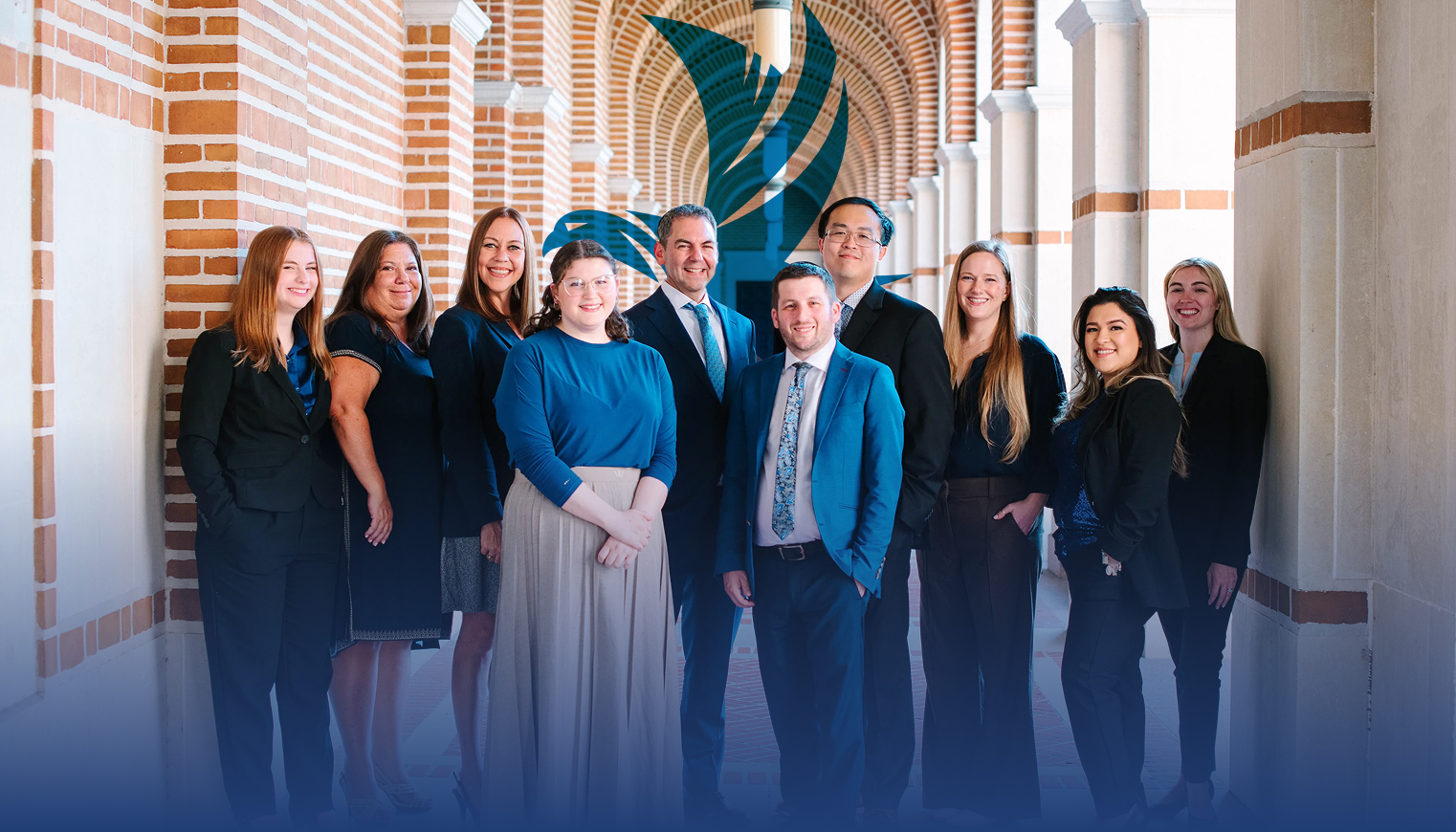
Meet Our Legal Team
A Nationwide Firm Focused on Disability, Federal Employment, and SSDI Law
-
 Eric Pines Attorney
 -
 Jadyn Marks Attorney
 -
 Michael Kleinman Attorney
 -
 Elliott Cin, Of Counsel Attorney
 -
 Menucha Slater Legal Assistant
 -
 Raquel Olmos Intake Specialist
 -
 Aaron Sacks Bookkeeper, Marketing
 -
 Trinity Buchanan Attorney
 -
 Michal Solomon Intern
 -
 Ari Rosen Paralegal, OPM Supervisor
 -
 Nicole Marquadt Paralegal, OPM Specialist
 -
 Michelle Cerrato Disability Specialist, OPM Specialist
 -
 Charles Wiesel Paralegal, OPM Specialist
 -
 Courtney Bolton SSDI Supervisor
 -
 Asher Meir Pines Legal Assistant
 -
 Steven Tu Operations Manager

Behind Every Case Is a Person Who Matters
Big-Picture Advocacy in Federal Employment and Disability Law — Driven by Compassion, Defined by Results
-
Pines Firm Successfully Litigates Reinstatement for VA Canteen Employee with Full Back Pay
Attorney Pines and AFGE 1633 were victorious in having the arbitrator find that a VA Canteen employee was wrongfully removed, and therefore should be put back to work and paid back pay for over a year and half of pay.
-
Wrongfully Terminated Veterans Administration Employee Gets Job Back & Full Back Pay
In an exciting precedent-setting victory, The Law Office of Eric L. Pines, PLLC has successfully helped a Veterans Administration employee get her job back after being wrongfully terminated for using leave for the birth of her child and to care for her autistic and blind children.
-
Major Success in Front of the MSPB in an OPM Disability Case
On July 19, 2023, Pines Federal achieved a big win in front of the Merit Systems Protection Board (MSPB) in an OPM disability case.
-
Pines Federal’s Amanda Moreno Wins Reinstatement and Backpay in MSPB Case at DHS, USCBP
The Appellant worked for Customs and Border Patrol for over 20 years when the Agency removed her for LWOP and alleged misconduct at work.