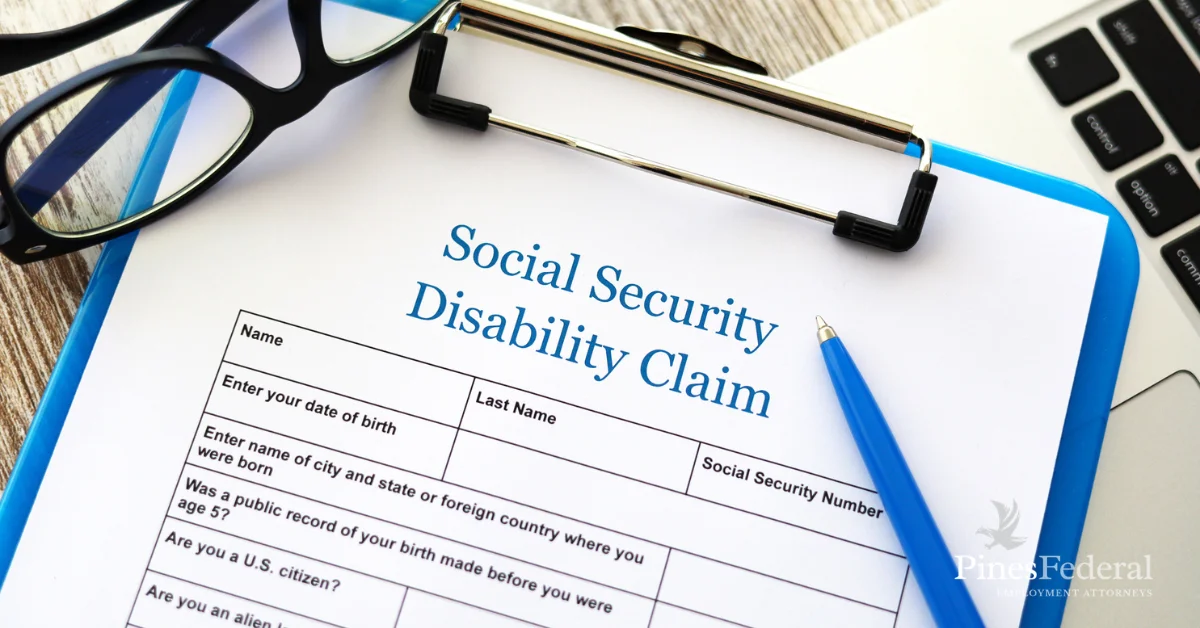
Many federal employees assume SSDI does not apply to them because they already have federal benefits. Others know SSDI may be available, but are unsure how it overlaps with OPM disability retirement, workers’ compensation, leave, or other programs. The basic answer is simple: being a federal employee who is under the FERS Retirement system does not prevent you from applying for SSDI.
For most federal workers covered under FERS, the more pressing questions aren't whether they can apply. They can. The more important question is whether they have the work credits and medical evidence to satisfy SSA's requirements.
At Pines Federal, we help federal employees nationwide understand their rights when a medical condition affects their ability to work. Our attorneys handle Social Security Disability and federal employment matters, giving us a practical understanding of how these claims can overlap.
FERS Employees Pay into Social Security
Most current federal employees are covered by the Federal Employees Retirement System, commonly known as FERS. FERS employees generally pay Social Security taxes through payroll deductions, which means they can earn the work credits needed to qualify for SSDI.
Some older federal employees may have service under the Civil Service Retirement System, or CSRS. Traditional CSRS employees generally did not pay Social Security taxes on their federal earnings. If you worked under CSRS, your SSDI eligibility may depend on whether you earned enough Social Security credits from other covered employment. Recent changes to federal law ended the Windfall Elimination Provision and Government Pension Offset, but CSRS employees should still confirm how their federal service, covered earnings, and benefit history affect their specific claim.
What Federal Employees Must Prove to Qualify for SSDI
SSDI is based on work history and disability. It is not a needs-based program, and it is not approved simply because a federal worker has a medical diagnosis.
To qualify, you generally must show that:
- You earned enough Social Security work credits.
- Your condition is expected to last at least 12 months or result in death.
- Your medical condition prevents substantial gainful activity.
- Your limitations are supported by medical evidence.
- You cannot perform past work or adjust to other work under SSA’s rules.
SSA looks closely at how your condition affects your ability to function in a work setting. Medical records should do more than name a diagnosis. They should help explain your limitations, treatment history, symptoms, medication side effects, and ability to sustain regular work.
Federal Employment Records May Help Support an SSDI Claim
Federal employees often have workplace records that can help explain how a medical condition affected their ability to do their job. These records may not decide the SSDI claim by themselves, but they can help support the larger picture.
Useful records may include:
- Position descriptions
- Attendance and leave records
- Reasonable accommodation requests
- Light-duty or modified-duty documentation
- Performance records tied to medical symptoms
- Agency correspondence
- Workers’ compensation records
- OPM disability retirement materials
- VA disability records, when applicable
These records can be especially helpful when they connect medical limitations to real work problems. For example, if a federal employee’s condition caused repeated absences, failed accommodation efforts, reduced productivity, or inability to perform essential duties, those facts may help support the SSDI claim.
The strongest claims usually combine solid medical evidence with clear documentation of how the condition affects work capacity.
SSDI Is Different From OPM Disability Retirement
Federal employees often ask about SSDI and OPM disability retirement at the same time. They are separate benefits with different standards.
OPM disability retirement focuses on whether a federal employee can continue providing useful and efficient service in their federal position. SSDI uses a broader standard. SSA considers whether the person can perform substantial gainful activity, including work beyond the employee’s federal job.
Because the standards differ, a federal employee may qualify for OPM disability retirement and still be denied SSDI. The reverse may also be possible depending on the facts.
For FERS employees, there is another important point: applying for SSDI is generally required as part of the OPM disability retirement process. That does not mean SSA must approve the SSDI claim. It means the federal employee must apply and provide proof of the application.
If both benefits are approved, SSDI can affect the amount paid through FERS disability retirement. OPM explains that many FERS disability retirement benefits are calculated as 60% of the employee’s high-3 average salary during the first year, minus 100% of the monthly Social Security disability benefit, if applicable. Beginning in the second year, the annuity is generally recalculated as 40% of the high-3 average salary, minus 60% of the monthly Social Security benefit or the earned benefit, whichever is higher, if applicable.
Federal employees should not assume that SSDI and OPM disability retirement will simply be paid in full at the same time. The benefits can work together, but the offset rules may affect the final monthly amount.
Can You Apply for SSDI While Still Employed by a Federal Agency?
Sometimes, yes. A federal employee may be able to apply for SSDI while still technically employed, especially if they are on leave, working reduced hours, or no longer performing substantial work because of a medical condition.
However, earnings matter. SSA uses substantial gainful activity rules to evaluate whether a person is doing too much work to qualify as disabled. If you are still receiving wages or performing work, SSA may review your earnings, job duties, accommodations, reduced schedule, and whether the work reflects your actual ability to sustain employment.
This issue should be handled carefully. Continuing to work, using leave, attempting modified duty, or receiving certain benefits can all affect how SSA reviews the claim.
Why Federal Employees Are Denied SSDI
Federal employees can be denied SSDI for many of the same reasons as other workers. A denial does not always mean the claim is weak. It may mean the evidence was incomplete, the limitations were not explained clearly, or SSA reached the wrong conclusion.
Common reasons for denial include:
- Medical records do not explain functional limitations.
- SSA believes the person can perform past work.
- SSA believes the person can adjust to other work.
- Earnings create questions about substantial gainful activity.
- The condition is not expected to last long enough.
- The claimant misses forms, deadlines, or requested information.
- The application relies too heavily on diagnosis rather than work restrictions.
For federal employees, denials may also happen when SSA does not fully understand the demands of the federal job, the effect of failed accommodations, or the role of agency documentation.
What To Do If Your SSDI Claim Is Denied
If SSA denies your claim, you usually have the right to appeal. The appeal should not simply repeat the original application. It should address the reason for denial and strengthen the record with better evidence.
That may involve updated medical records, more detailed provider opinions, work history clarification, federal employment documentation, and preparation for a hearing before an Administrative Law Judge.
Federal employees should also consider how the SSDI appeal may affect related matters, including OPM disability retirement, workers’ compensation, VA disability, or pending employment issues.
Have Questions?Pines Federal Can Help With No Upfront Cost.
SSDI claims can be difficult for anyone, but federal employees often face additional challenges because their claims may involve OPM disability retirement, agency records, reasonable accommodation issues, leave history, and other employment-related documentation.
At Pines Federal, we represent federal workers nationwide in Social Security Disability and federal employment matters. If a medical condition has made it difficult or impossible to keep working, we can review your situation, explain your options, and help you pursue the benefits you may be entitled to receive.
Call (832) 462-7655 or contact us online.